
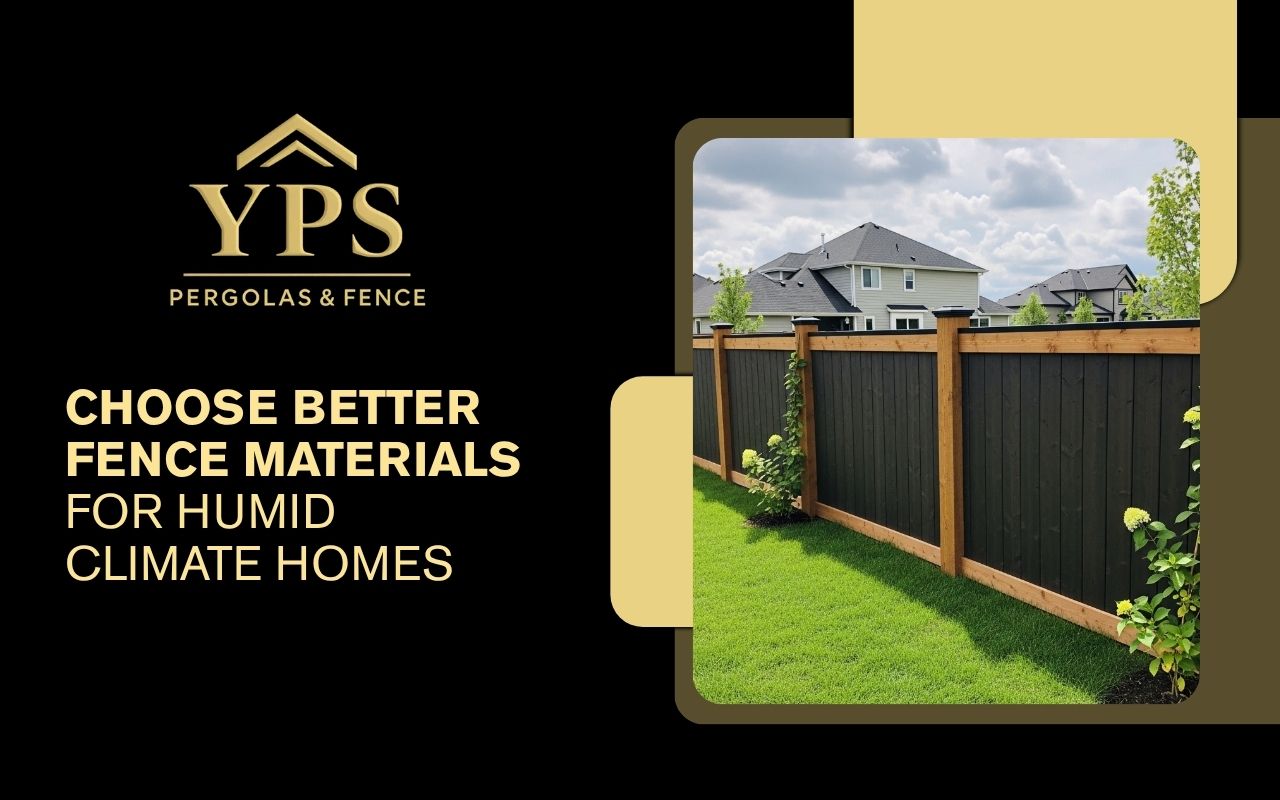
Choose Better Fence Materials For Humid Climate Homes
Choosing fence materials for humid climates starts with knowing how moisture affects your yard. In damp areas, fences face rain, heat, mold, and salty air. As a result, the right material can protect your home while lowering future repairs.
At YPS Pergolas And Fence, we help homeowners choose options that fit local weather, home style, and daily needs. Therefore, this guide explains simple choices like vinyl, aluminum, treated wood, and other strong materials for humid places.
How Moisture Changes The Way Your Fence Performs
Humidity can make wood swell, bend, crack, or rot. Also, wet air can weaken coatings on metal and create rust when small scratches appear. The best fence materials for humid climates reduce these problems and keep their shape longer.
Mold and mildew are also common in damp yards. They can stain panels and make surfaces look old. For this reason, it helps to compare materials before choosing a fence for long-term value and easier care.
Vinyl Fencing Stays Stable In Damp Outdoor Areas
Vinyl fencing is a smart choice because it does not absorb water. It will not rot, peel, or attract termites. Therefore, it works well for homes that need a clean fence with low upkeep.
For many homes, fence materials for humid climates must handle both rain and strong sun. Vinyl can do both with simple care. A hose rinse and mild soap usually remove dirt, pollen, and light mildew. You can review our fencing material details for more support.
Aluminum Fencing Adds Strength Without Heavy Ongoing Care
Aluminum fencing is light, strong, and easy to maintain. Since water does not soak into it, the surface handles wet weather better than many heavier metals. Also, powder-coated finishes help protect the fence from scratches and fading.
Among fence materials for humid climates, aluminum is often preferred when privacy is not the main goal. It is also one of the most practical corrosion resistant fence options for homes that want open views and dependable security.
Good for decorative front yards and pool areas
Low risk of rust with quality coating
Lightweight panels that are easier to install
Pressure Treated Wood Brings Warm Natural Fence Style
Pressure treated wood gives a classic look that many homeowners still love. During treatment, the wood receives protection that helps slow rot and insect damage. However, it still needs regular care in humid weather.
Pressure treated wood can still work as one of the fence materials for humid climates when it is sealed and checked often. Still, skipped maintenance can lead to cracks, stains, and soft boards over time.
Other Corrosion Resistant Fence Options Worth Comparing Carefully
Composite fencing can give the look of wood with better moisture control. It blends wood fibers with plastic, so it resists rot, termites, and swelling. In addition, it needs less yearly care than natural wood.
Wrought iron offers a strong and elegant look, but it needs careful coating. Once paint chips, humid air can reach the metal. Because of this, homeowners should compare style, privacy, and upkeep before making a choice.
Composite works well for privacy and low upkeep
Wrought iron adds strength and a classic design
Quality coatings help metal fences last longer
Simple Care Steps That Extend Fence Service Life
Even strong fences need basic care in damp weather. First, rinse panels to remove dirt, salt, and pollen. Then, check posts, screws, hinges, and gates for early signs of wear.
Our team at YPS Pergolas And Fence recommends fast repairs when small issues appear. This prevents moisture from spreading damage. For local support, visit our Miami fence service page.
Trim plants away from fence panels
Use rust-resistant screws, hinges, and locks
Seal or repaint wood and iron when needed
Frequently Asked Questions
What fence material handles humidity best?
Vinyl and aluminum are often the easiest choices because they resist moisture, rot, and many common weather problems. However, the best option depends on privacy needs, budget, and home style.
Is vinyl fencing good for wet weather?
Yes, vinyl fencing performs well in damp areas because it does not absorb water. It also needs simple cleaning and does not require painting or sealing.
Does aluminum fencing rust in humid climates?
Aluminum does not rust like iron. Also, a powder-coated finish adds more protection, making it a strong choice for many humid outdoor spaces.
Can wood fencing last in high humidity?
Yes, but it needs more care. Pressure treated wood should be sealed, cleaned, and checked often to reduce swelling, cracking, and rot.
How often should a humid climate fence be inspected?
Most fences should be checked at least twice a year. After heavy rain or storms, a quick review can help catch loose parts, stains, or early damage.
Plan A Humidity Ready Fence With Our Team
The right fence should match your weather, design goals, and maintenance comfort. Therefore, comparing vinyl, aluminum, wood, composite, and coated metal helps you make a confident choice for your property.
At YPS Pergolas And Fence, we can help you choose fence materials for humid climates with clear guidance and local experience. For nearby service, explore our Hialeah fence solutions, our Miramar fence services, or contact our team.