
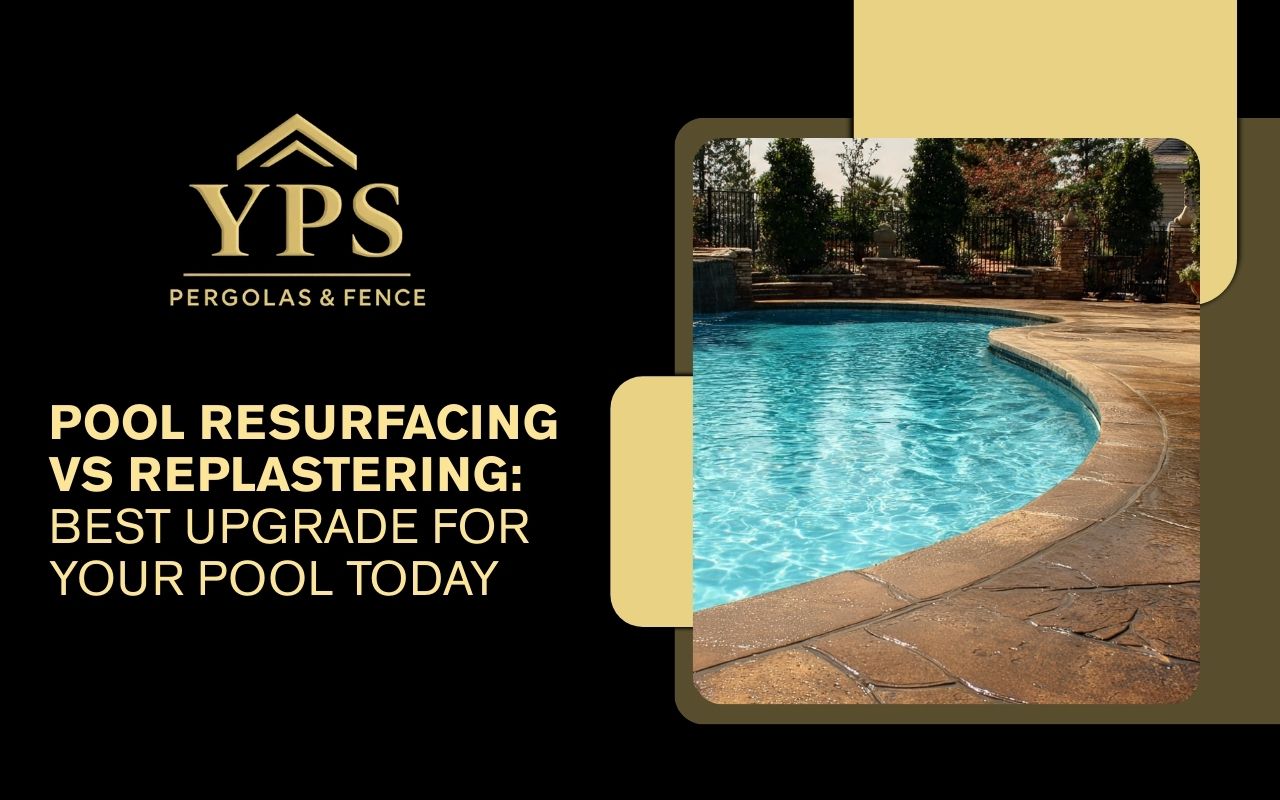
Pool Resurfacing vs Replastering: Best Upgrade for Your Pool Today
At YPS Pergolas And Fence, pool resurfacing vs replastering can feel like a big choice. Yet, when you know the key differences, it becomes easier to pick the right upgrade for your pool.
Your pool surface affects looks, comfort, and long use. It also shapes upkeep, downtime, and the finish that fits your home and budget best.
Simple Differences Between Resurfacing and Replastering for Pool Owners
At YPS Pergolas And Fence, pool resurfacing vs replastering starts with one main idea. Resurfacing adds a new finish over the old surface, while replastering removes old plaster and adds a fresh plaster coat.
Because of that, resurfacing is often better for light wear, small marks, and color updates. Replastering is often better when the plaster is thin, rough, or badly damaged.
Resurfacing covers the existing surface.
Replastering removes old plaster first.
Both options improve comfort and looks.
Plaster vs Pebble Finishes and Their Surface Lifespan Compared
When comparing plaster vs pebble finishes, the feel and life of each surface matter. Plaster looks smooth and classic, while pebble feels more textured and usually lasts longer.
In many pools, plaster lasts about 10 to 15 years. Pebble finishes can last 20 years or more, so they are often a smart choice for owners who want longer service.
Plaster feels softer underfoot.
Pebble is stronger against wear.
Pebble often gives better long-term value.
Common Signs Your Pool Surface Needs a Fresh Upgrade
Your pool may need work when you see rough spots, cracks, stains, or flaking. Also, staining/etching that does not go away after cleaning can be a clear warning sign.
If water care becomes harder and algae keeps coming back, the surface may be weak. At YPS Pergolas And Fence, we often see these signs before owners choose pool resurfacing vs replastering.
Budget Ranges and Long-Term Value for Each Pool Upgrade
Budget ranges can help you choose with less stress. In many cases, resurfacing costs less at the start because it avoids full removal of old plaster and cuts labor time.
Still, long-term value matters too. A durable pebble finish may cost more first, but it can last longer, which may lower future repair and upkeep needs.
Resurfacing often has a lower starting cost.
Replastering usually needs more labor.
Longer-lasting finishes can save money later.
Prep Steps Before Starting a Pool Resurfacing Project Safely
Good prep steps help the new finish stay in place. First, the pool is drained, cleaned, and checked for cracks, loose material, and other weak spots.
After that, the surface may need washing and light etching so the new layer can bond well. Careful prep gives a smoother result and helps the finish last longer.
Prep Steps Needed Before a Full Pool Replastering Job
Replastering needs deeper prep steps because the old plaster must come off first. This step takes more work, but it helps the new plaster bond to a clean and solid shell.
Next, the shell is cleaned and checked for cracks or leaks. Repairs are done before the fresh plaster goes on, so the new surface has a stronger base.
How Downtime Changes Your Choice Between Both Pool Upgrades
Downtime is important, especially during warm months. Resurfacing is often faster, so many pools are ready again in about one to two weeks.
Replastering usually takes longer because it includes removal, repairs, and curing time. For that reason, pool resurfacing vs replastering is also a timing choice, not only a finish choice.
Frequently Asked Questions
Which option is faster for most pool owners?
Resurfacing is usually faster because it does not require full plaster removal. As a result, the pool is often ready sooner.
Which finish lasts longer, plaster or pebble?
Pebble usually lasts longer than plaster. It also handles daily wear and water changes better in many cases.
Can staining and etching mean the surface is failing?
Yes, staining/etching can be a sign of surface wear. If cleaning does not help, the finish may need an upgrade.
Is replastering always more expensive than resurfacing?
Often, yes, because replastering needs more labor and removal work. Still, the final cost depends on the pool condition and finish choice.
Where can I ask about the right service for my pool?
You can review pool and outdoor improvement services to learn more. You can also contact YPS Pergolas And Fence for pool upgrade help for direct guidance.
Choosing the Best Finish for Easy Care and Longer Use
At the end, pool resurfacing vs replastering depends on your pool’s current condition, your finish goals, and how much downtime you can accept. Both options can improve comfort, style, and daily use.
If you want a quick refresh, resurfacing may fit best. If you need a full new base, replastering may be the better answer. At YPS Pergolas And Fence, pool resurfacing vs replastering should always match your pool, your plans, and your long-term comfort.